
When was the last time you hired a company or purchased a product without reading at least a few reviews?
Whether you're looking for a restaurant, contractor, accountant, attorney, or marketing agency, chances are you check online reviews before making a decision. Your customers do the exact same thing.
Did you know your online reputation could become one of your most valuable marketing assets?
Positive reviews build trust, improve your visibility in search engines, and provide authentic social proof that no advertisement can match.
The good news? Managing your online reputation doesn't have to be complicated. With a little consistency each month, your reviews can become one of your hardest-working marketing tools.
Your Reputation Lives Across the Internet
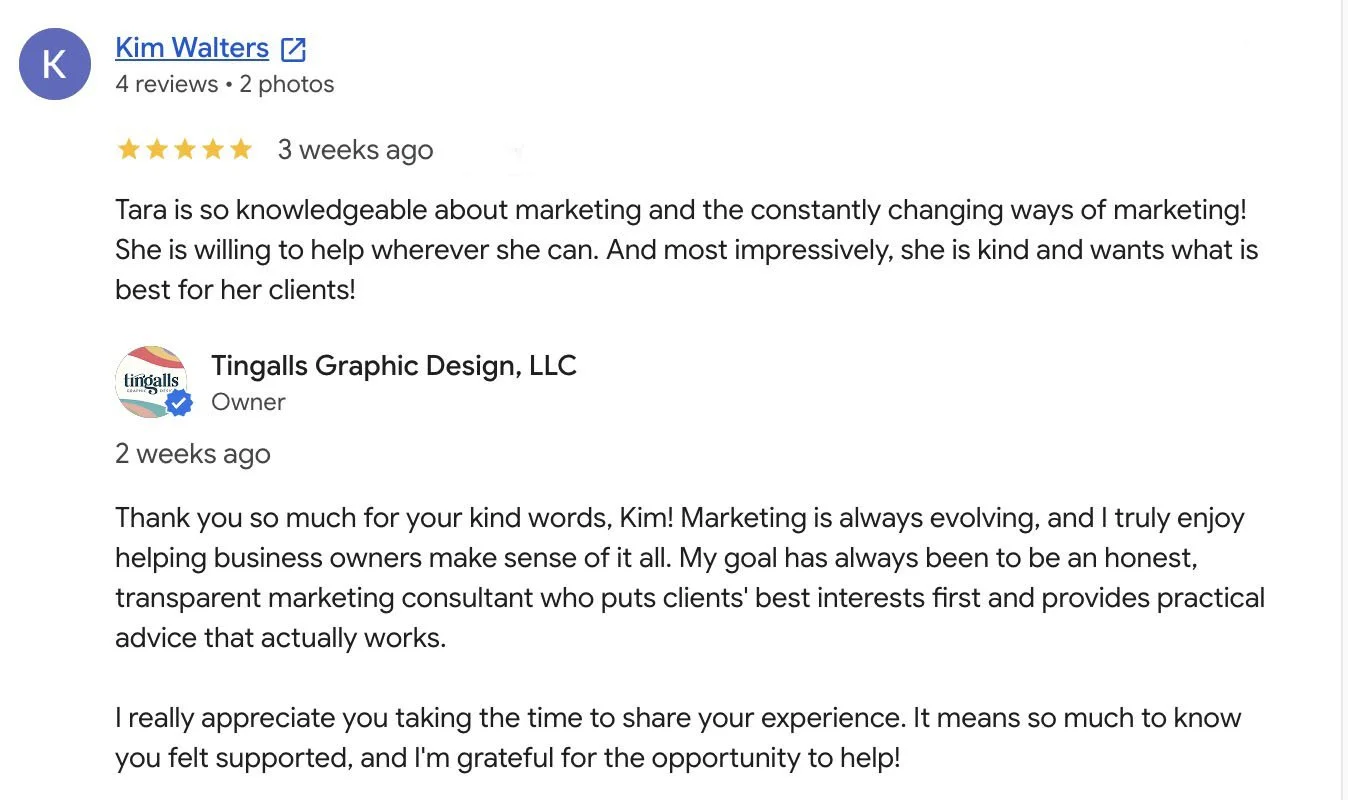
Google Review from Kim Waters after attending a Workshop of ChatGPT
Many business owners think only about Google Reviews, but your online reputation extends far beyond Google.
Depending on your industry, customers may also research your business on platforms like Yelp, Facebook, Houzz, Angi, BBB, Healthgrades, NextDoor, TripAdvisor, professional organizations, or industry-specific directories.
The important thing is consistency. Potential customers often compare reviews from multiple sources before deciding who to trust. A strong presence across several reputable platforms helps reinforce your credibility and gives people confidence that they're making the right choice.
Respond to Every Review–Positive & Negative
One of the easiest ways to strengthen your online reputation is to respond to every review.
When someone leaves a positive review, thank them for taking the time to share their experience. A personalized response shows appreciation and reminds future customers that you value your clients long after a project is complete.
Negative reviews also deserve your attention. While it's never fun to receive criticism, responding professionally demonstrates integrity, accountability, excellent customer service, and that you’re paying attention. A calm, respectful response that affirms their frustration with an effort to make things right will often leave a stronger impression than the negative review itself.
Remember, you're not only responding to the reviewer—you're responding to every potential customer who may read that conversation in the future.
Reviews Can Improve Your Search Engine Optimization (SEO)
Customer reviews don't just influence buying decisions—they also support your search engine optimization efforts.
Google considers review quality, quantity, recency, and engagement when determining local search visibility.
Businesses that consistently receive recent reviews and actively respond to them often perform better in local search results than ones with outdated or neglected profiles.
Even better, your customers naturally include keywords to support your SEO. For example:
“I had the pleasure of working with Tingalls to revamp my logo, branding, and website, and I couldn’t be happier! They listened to my ideas and vision, and delivered beyond what I could have imagined.”
- Sarah Mueller, Granting Wishes Consulting
When responding, you can then naturally reference those same services without sounding overly promotional.
"Thank you, Sarah, for trusting Tingalls with your new business’s logo design and Squarespace website. It was a pleasure helping your business launch its new brand!"
Those natural keyword references strengthen your online presence while keeping your responses genuine and conversational.
Reviews Are Powerful Social Proof
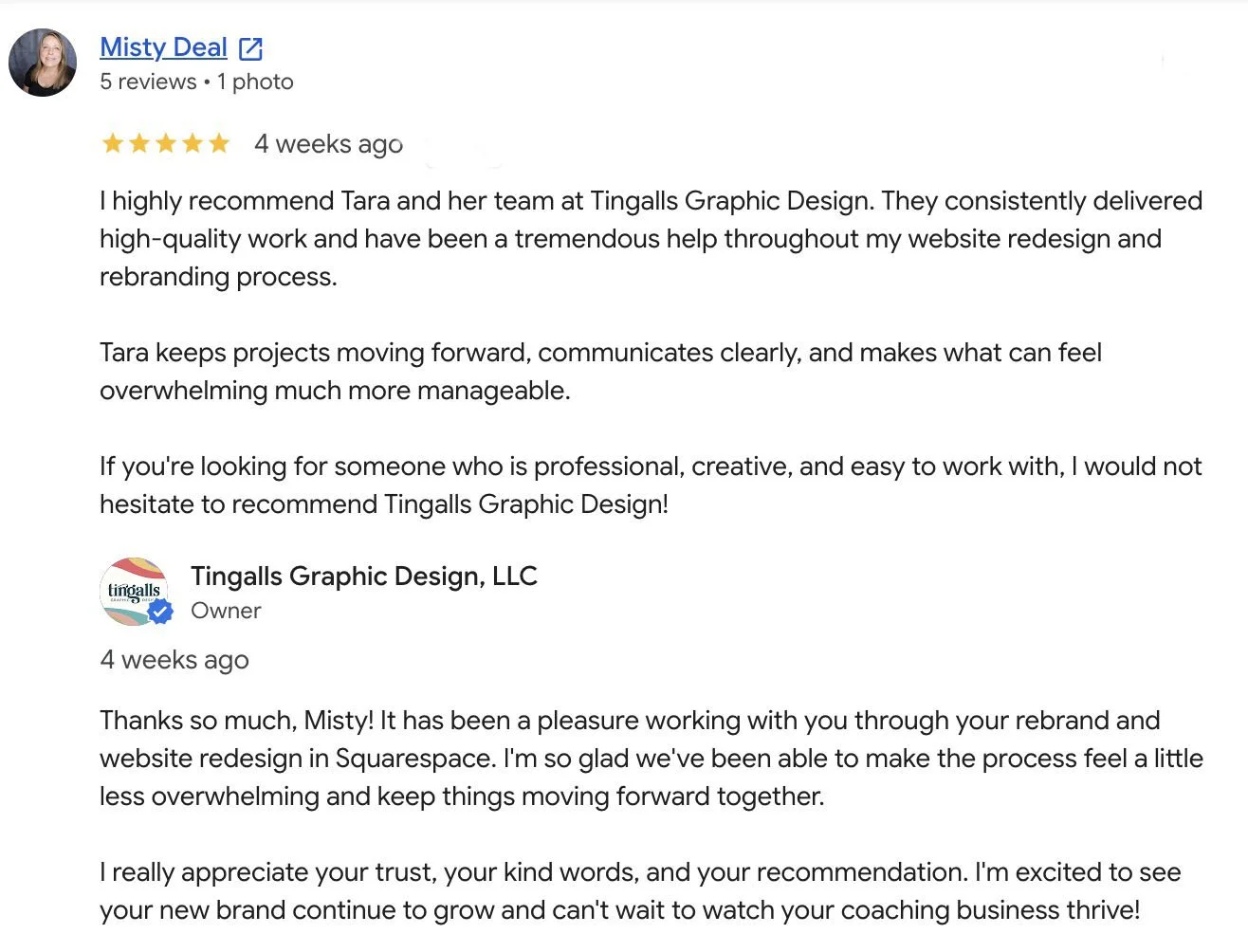
Google Review from Misty Deal, owner of Guardian Nurse Consulting
Your reviews shouldn't live only on review websites. They're some of the most persuasive marketing content you'll ever have because they're written by real customers—not by your marketing team.
Look for opportunities to feature testimonials throughout your marketing materials, including:
Your website
Service pages
Social media
Email newsletters
Sales proposals
Brochures and print materials
Trade show displays
Presentation slides
Case studies
You can even organize testimonials by service to help prospective clients quickly find experiences that relate to their own needs.
AI Is Paying Attention to Your Reputation, Too
As AI-powered search tools like ChatGPT, Google AI Mode, Gemini, and Perplexity become more common, your online reputation matters even more.
These tools don't rely solely on your website. They also evaluate information from trusted sources across the web, including customer reviews, business listings, and other signals that help establish your expertise and credibility.
Simply put, every thoughtful review becomes another piece of content helping define your business online.
Make Online Reputation Management Part of Your Marketing Plan
Businesses that consistently monitor reviews, respond professionally, encourage customer feedback, and repurpose testimonials into their marketing build stronger brands over time. They earn more trust, improve their visibility in search results, and give potential customers the confidence to choose them over the competition.
Think of every review as another opportunity to market your business—even after the project is complete.
Online reputation management isn't just customer service—it's one of the smartest investments you can make in your marketing. Every review helps tell your story, builds trust with future customers, strengthens your SEO, and increasingly influences how AI-powered search tools understand and recommend your business.
Freebie: Monthly Online Reputation Checklist
Set a calendar reminder each month and spend 20–30 minutes each month to keep your online reputation working for you, including:
Review every platform where customers can leave feedback for your company and respond to each new review, both positive and negative.
Ask 10 recent satisfied customers to leave reviews to keep your profiles active and current.
Look for recurring keywords and services mentioned in reviews, then naturally reinforce them in other marketing content.
Repurpose your best testimonials by adding them to your website, social media, email newsletters, and proposals.
