
Facebook may be changing the rules again, and small business owners should pay attention.
Meta, Facebook's parent company, has been testing restrictions that limit how often certain business Pages can share links to outside websites without paying for a subscription.
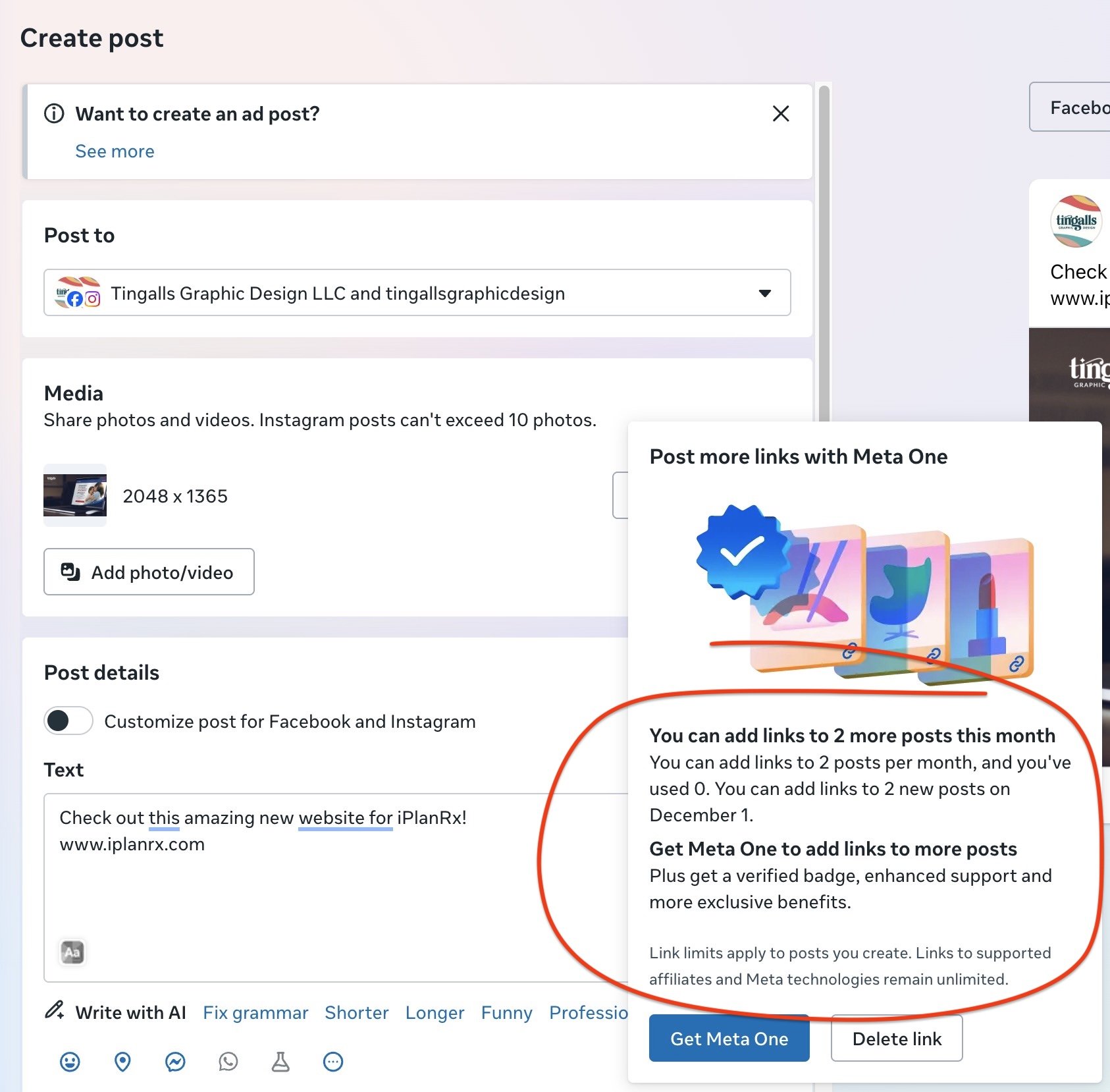
Starting in December 2025, Meta began testing restrictions that limit certain Facebook business Pages to just two organic posts or comments containing external links per month. The test expanded in September 2026, and some Page administrators, including Tingalls, are now seeing notifications about these limits.
This means if you regularly share links to your website, blog articles, event registrations, or other outside sources, you may only be able to do so twice a month without paying. The limit resets each month, and while you can still share photos, videos, and regular updates, adding an external link could trigger the restriction. Not every business Page is affected, at least not yet.
Want to Share More Links? It Could Cost You.
Meta is tying additional link-sharing privileges to its paid Meta One for Business subscription plans. While plans start at $14.99 per month, businesses affected by the restriction need the $49.99-per-month Advanced plan to increase their allowance to eight link posts or comments. Higher-priced plans offer more.
For small businesses that have relied on free Facebook posts to drive traffic to their websites, this could mean rethinking their strategy or adding another monthly marketing expense.
But I think this change brings up an even bigger question:
Are small businesses relying too heavily on social media to market their businesses?
After more than 25 years of helping small businesses with their marketing, I believe this is a good reminder of something I've been telling clients for years:
Your website should be the foundation of your marketing efforts, not your Facebook page.
Social Media Isn't Always a Sales Tool
One of the most common things I hear from business owners is, "I don't get any sales from Facebook." My response? That's not what Facebook is typically used for to grow sales in your business. Let me explain.
For many service-based businesses, social media is less about making an immediate sale and more about building brand awareness, sharing helpful information, and staying connected with existing and potential customers.
Think about a remodeling company, accountant, or landscaper. Most people aren't scrolling through Facebook looking to hire one that afternoon. But when the need comes up, being familiar with a business can make a big difference.
That's why I encourage businesses to think beyond likes, shares, and immediate sales when measuring their social media success.
Different Marketing Tools Need Different Goals
Before I recommend any social media platform to a client, I ask two questions:
Is your target audience actually using this platform?
What are you hoping to accomplish by being there?
Every marketing tool should have a purpose.
Facebook might be great for staying connected with your local community. LinkedIn might be better for building professional relationships. Email marketing can help you stay in touch with people who have already expressed interest in your business.
The goal isn't to be everywhere. It's to be where your audience is and give them a reason to remember you.
Your Website Should Be Your Marketing Foundation
I often describe a business website as its “digital front door.” It's where your best content should live, including your services, customer testimonials, helpful articles, frequently asked questions, and ways for customers to contact you.
Social media helps introduce people to your business and, when appropriate, guide them back to that website. But here's the catch: When you build your entire marketing strategy around Facebook, you're building on a platform you don't control.
Facebook can change its algorithms, limit your reach, introduce new fees, or change how links are shared. Your website gives you far more control over your content and how you present your business.
And, Don't Forget About Google Business Profile
One of the first things I encourage small businesses to focus on is their Google Business Profile. Why? Because it helps businesses show up where people are actively searching for their services.
Unlike someone casually scrolling through Facebook, a person searching Google for "landscaping companies near me" may already be looking to hire someone.
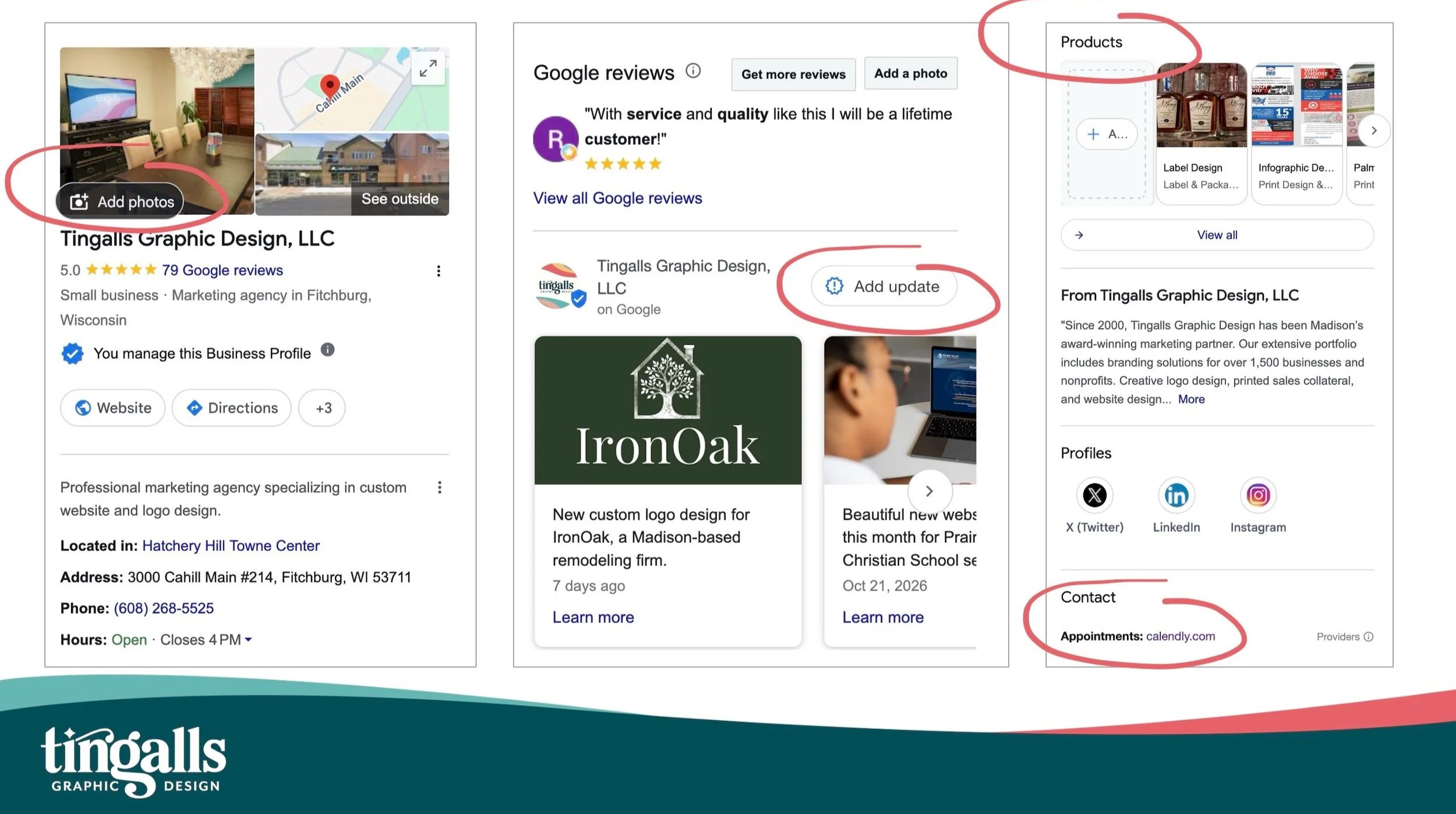
A well-maintained Google Business Profile can feature business updates, photos, services, reviews, and links to your website. It's a valuable part of your local marketing strategy, especially for service-based businesses.
And best of all, it's free! Just check out all these amazing features below:
So, Should You Stop Using Facebook?
Absolutely not. Facebook can still be a valuable marketing tool if your audience is there and you're using it with a clear purpose.
But instead of relying on constant promotions, discounts, or sales pitches, focus on building relationships, sharing helpful information, showcasing your work, and giving people reasons to trust your business.
And remember, not every social media post needs to include a link. Some of your best content may simply help someone learn something new or get to know the people behind your business.
The Bottom Line
Whether Facebook moves forward with these restrictions or not, the bigger lesson remains the same. Don't build your entire marketing strategy on a platform where someone else makes the rules.
Invest in your website. Keep your Google Business Profile updated. Create helpful content. Build your email list. And use social media as one piece of a larger marketing plan.
At Tingalls Graphic Design, we help small businesses build websites and marketing materials that work together to strengthen their online presence.
Need help making your website the foundation of your marketing? Let's talk.
